
Case study · Libraries and public sector
Building Community Based Summers
Accessible Website for a California Library Program
Building Community Based Summers trains California library staff to design summer services with their communities. We built its website to WCAG 2.1 AA from the designer's mockups, launched it in 2023 and supported it through a 2025 rebrand.
Overview
Building Community Based Summers, first launched as Building Equity-Based Summers (BEBS), is a California Library Association program, supported by the California State Library, that trains library staff to design summer services with their communities instead of for them. Its four learning sessions, workbook and story videos help libraries reach people who do not already use the library.
We built the program's website in WordPress, working from the program designer's mockups and style guide, and launched it in May 2023. We maintained it through a podcast redesign, a renamed learning section and a move to a new name and domain in 2025.
The Challenge
The site's audience is library staff across California, and the program is about access. The site had to meet the same standard: usable by keyboard and screen reader, readable at any screen size and available in the languages California libraries serve.
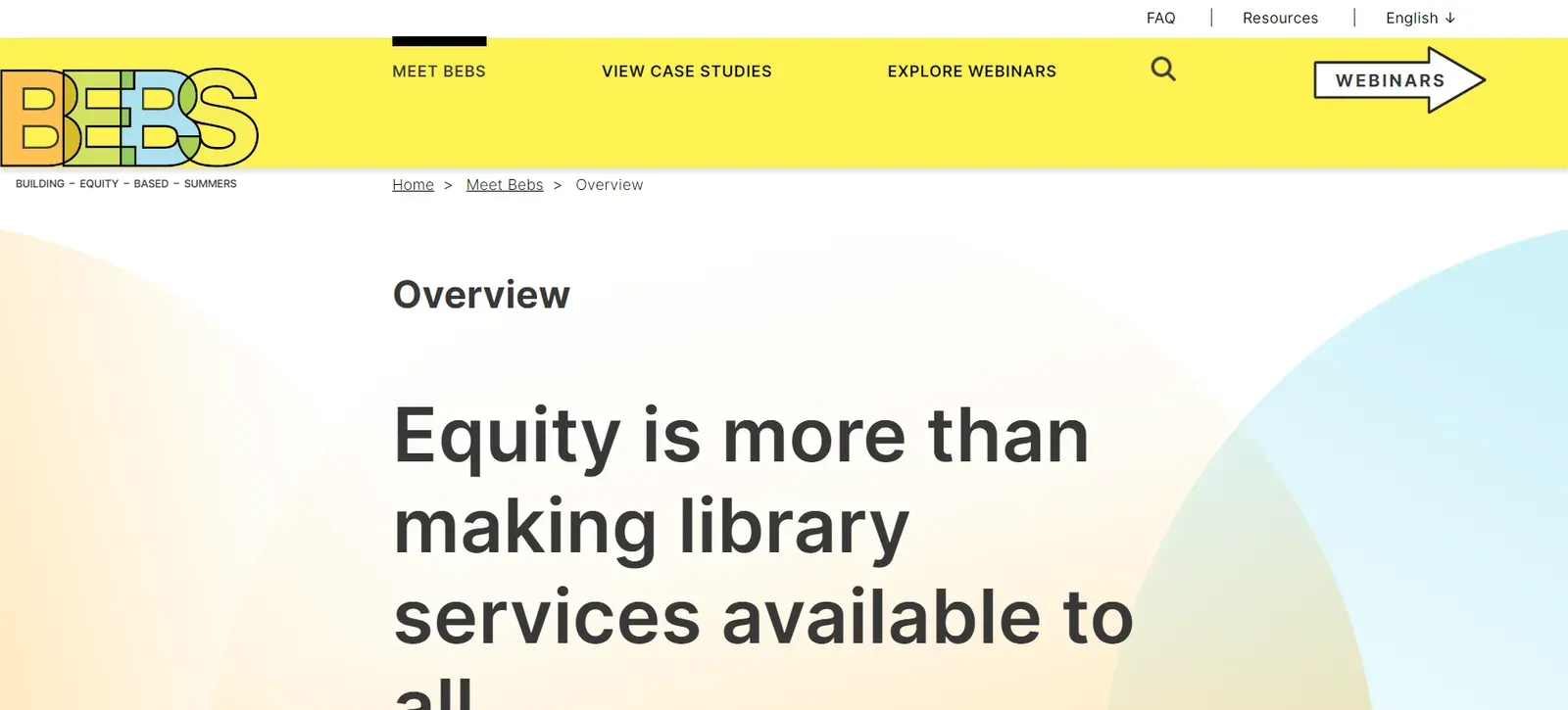
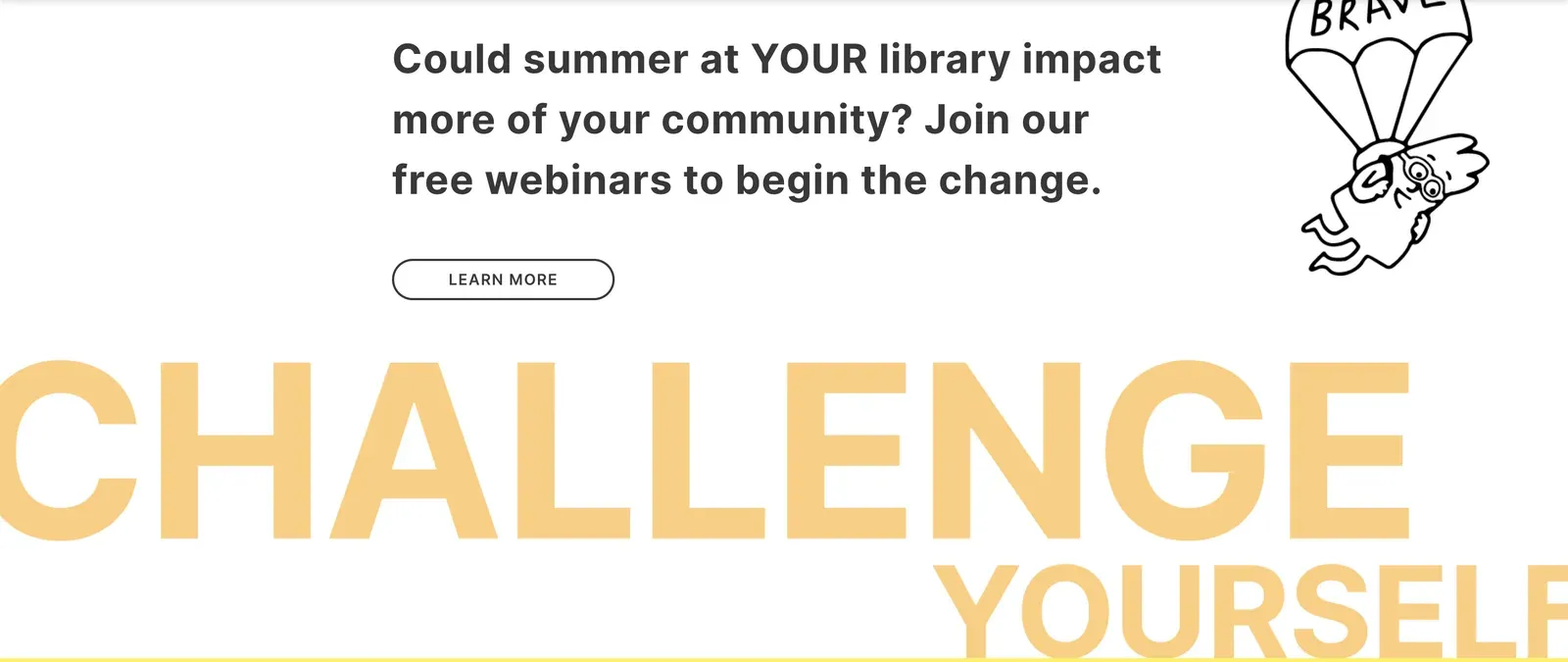
The design was also demanding. It uses layered color circles, giant display words, hand-drawn illustrations and "quilts" of photo and video squares, all of which had to match the designer's grid and type specs without breaking on phones and tablets.
What We Built
A design-faithful WordPress build
Custom Elementor templates for every page type in the mockups: the home page, overview pages, the learning sessions, training and growth story pages, the FAQ, resources and a search results page. Each content section can be edited in the WordPress admin. Design QA against the style guide ran alongside the build, and the mobile mockups got their own pass for every page.
Accessibility built in and tested
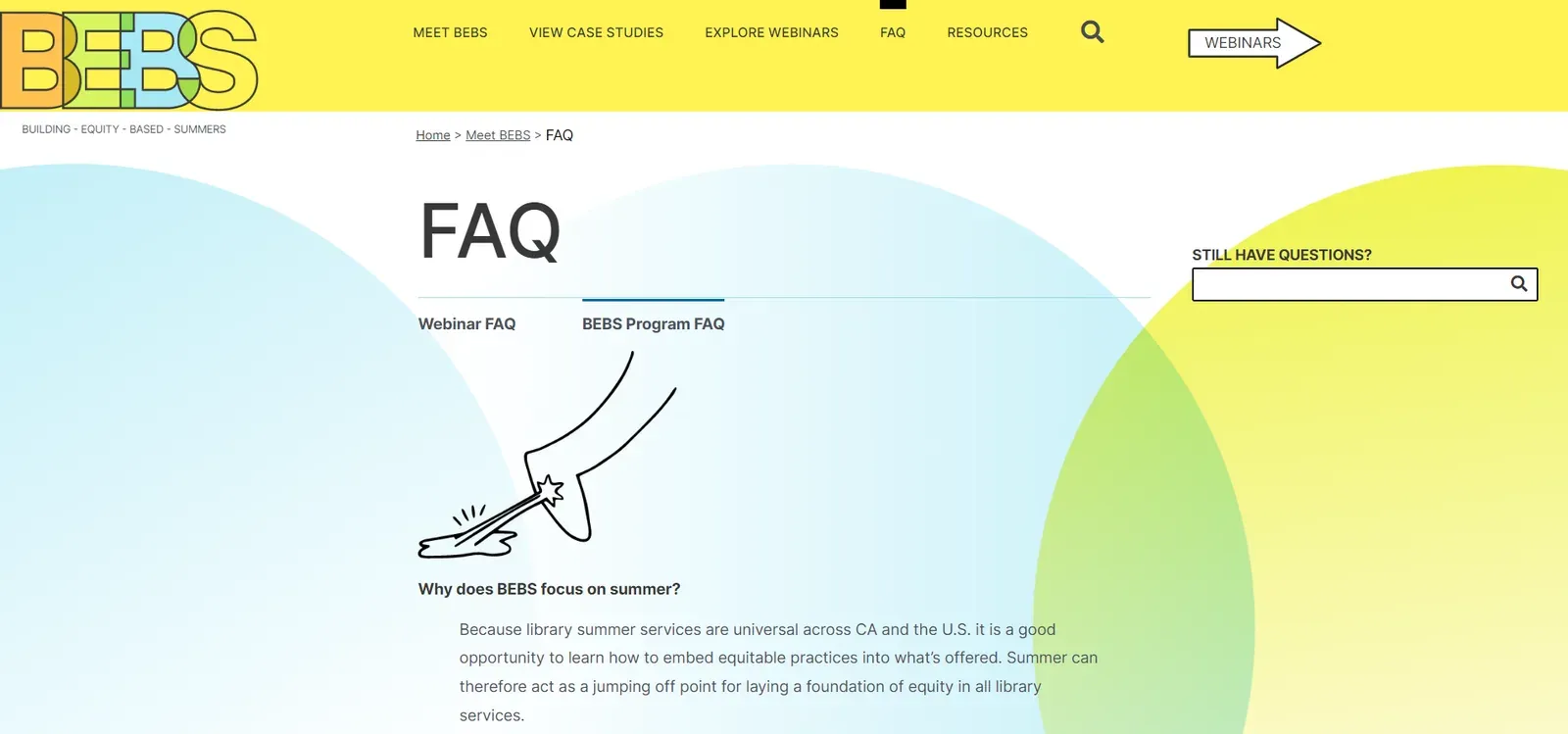
The site was built to WCAG 2.1 AA. Every key page was scanned with axe until it cleared all critical, serious and moderate issues, then walked with a keyboard and a screen reader. We added ARIA landmarks and labels, a skip to content link, visible focus states, a proper heading structure and alt text for every illustration. FAQ questions are coded as headings, and answers are always visible instead of hidden in an accordion, so nothing depends on a hover or a click to be read.
Story quilts and video
Three photo and video quilts, on the home page and the training and growth story pages, open each story video in a modal on the same page. On phones, all three quilts reflow the same way, with video popups that match the rest of the site.
Built for California's languages
A language menu, styled to match the site's own menus, translates every page into more than 15 languages, including Spanish, Chinese, Vietnamese, Tagalog, Korean, Hmong, Punjabi and Khmer.
Search, downloads and forms
Site search slides down from the top nav. A downloads page offers the full program workbook or each section as its own PDF. The contact form validates each field with plain-language error messages, and when spam picked up we added a honeypot rather than a CAPTCHA, which keeps the form accessible.
Changes after launch
After launch we added a podcast page fed by Buzzsprout, later redesigned so the program lead adds new episodes herself. We renamed the Webinars section to Learning, including its URLs, reworked the principles page, added security headers and a firewall, and in 2025 moved the whole site to communitybasedsummers.org with a new logo and updated breadcrumbs.
Results
- A statewide training program with a public home built to WCAG 2.1 AA and tested with axe, keyboard and screen reader.
- The program's full design system carried into a site that holds up on phones, tablets and desktops.
- Every page available in more than 15 languages.
- A site the program team updates on its own, supported by us from launch through the 2025 rebrand.