
Case study · Education technology
Lightspeed Systems
Website Redesign and Rebuild for a K-12 Ed-Tech Company
Lightspeed Systems sells a broad suite of K-12 software to buyers from district IT directors to superintendents and parents. Its custom WordPress theme was hard to edit and prone to breaking, so we designed a new site, rebuilt it on Elementor, moved every post and resource across by script, and launched on January 20, 2025. Since then we have added security hardening, an events calendar, a multisite network for microsites and gated content.
Overview
Lightspeed Systems makes software that K-12 schools and districts use to filter, monitor and manage student devices, including web filtering, classroom management, safety alerts and device management. Its website has to explain a broad product suite to very different buyers, from district IT directors to superintendents, teachers and parents.
We designed and rebuilt lightspeedsystems.com on WordPress, moved its content across, and launched it on January 20, 2025, less than three months after kickoff. We have supported and extended the site since.
The Challenge
Lightspeed first asked us about the site's speed and mobile problems. Once we saw the code, the bigger issue was clear. The custom theme used Advanced Custom Fields as a page builder with little documentation, most of the layout could not be changed from the WordPress admin, and output buffering in the templates made problems hard to debug and prone to breaking under caching. Shortly before the rebuild, the main navigation broke on its own and had to be restored from a database backup.
Lightspeed also wanted a structure that could take new products and new audiences without a developer, and the new site had to be live early in the year, ahead of its spring marketing push. We recommended a rebuild rather than a refactor.
What We Built
A new design system
We started from a mood board and the client's own brand requirements, including an exact button shape and corner radius. We built a style guide in Figma covering heading sizes, buttons, links, tables, accordions, tabs, carousels and data boxes. From there we designed the header and footer with mega menus for products and audiences, the homepage through several rounds of client feedback, and the persona, challenge and product page templates.
Pages the marketing team can edit
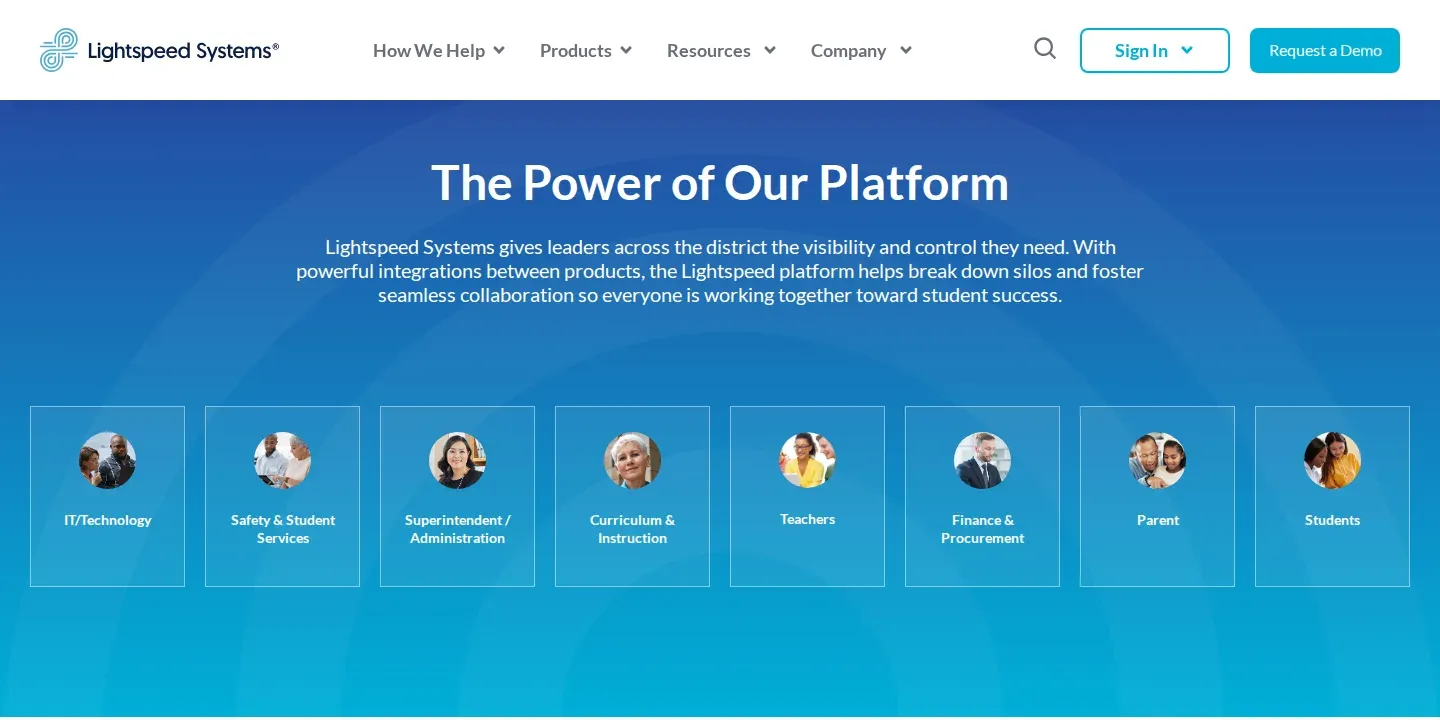
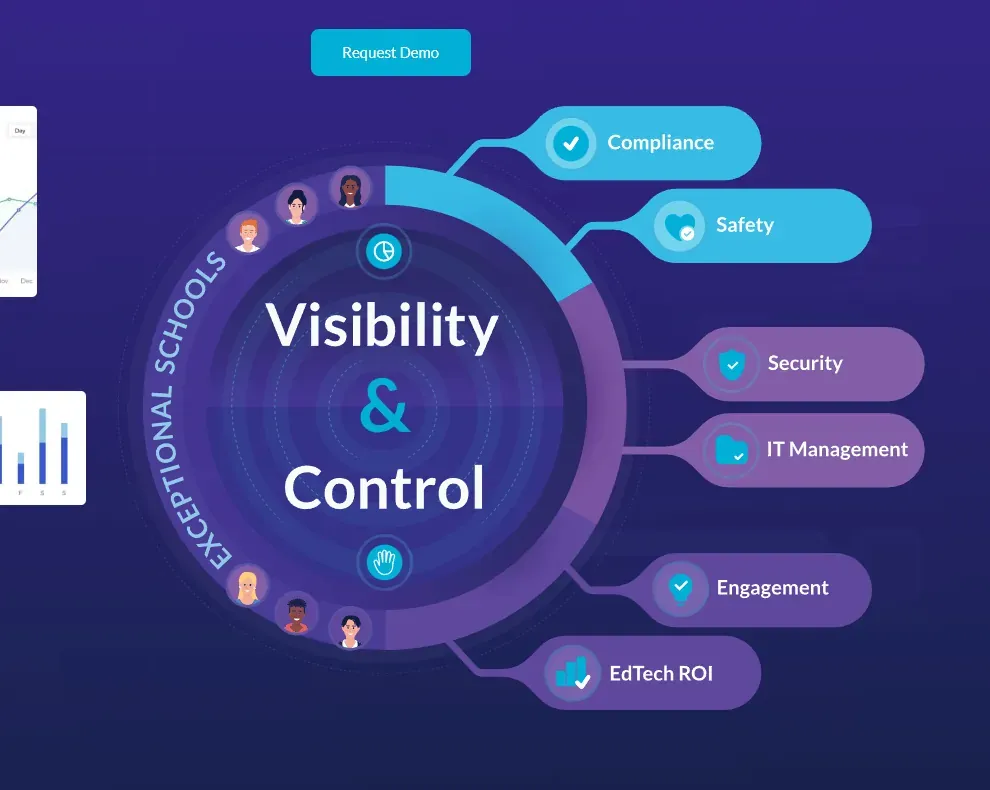
The site runs on Elementor with the Hello theme, so Lightspeed's team can build and change pages themselves. It is organized around the questions buyers bring: eight persona pages (IT and technology, safety and student services, superintendents and administration, curriculum and instruction, teachers, finance and procurement, parents, and students), challenge pages for compliance, safety, security, IT management, engagement and ed-tech ROI, and a page for each product.
Content moved by script
The old blog stored posts as custom content blocks that would not export cleanly, so we wrote Python scripts that walked the sitemaps and rebuilt each post on the new site: title, author, date, tags, images, body, slug, SEO title, meta description and search keywords. The same approach moved news, media releases, case studies, e-books, white papers, webinars and FAQs. We merged media releases into the news section with redirect rules for the old URLs, and carried each landing page's title tag and meta description over to the matching new page.
Search, regions and forms
Site search covers every resource type. A language selector serves regional English versions, such as UK English, alongside translated pages. Demo, pricing and contact forms feed Lightspeed's marketing automation platform.
After launch
Since launch we have run monthly updates and kept adding features:
- Security: After Lightspeed's security team pen tested the new site, we moved everyone to individual logins with two-factor authentication, hid the admin login, added headers to block clickjacking on forms, and set up a web application firewall with brute-force protection, rate limiting, malware scans and alerting.
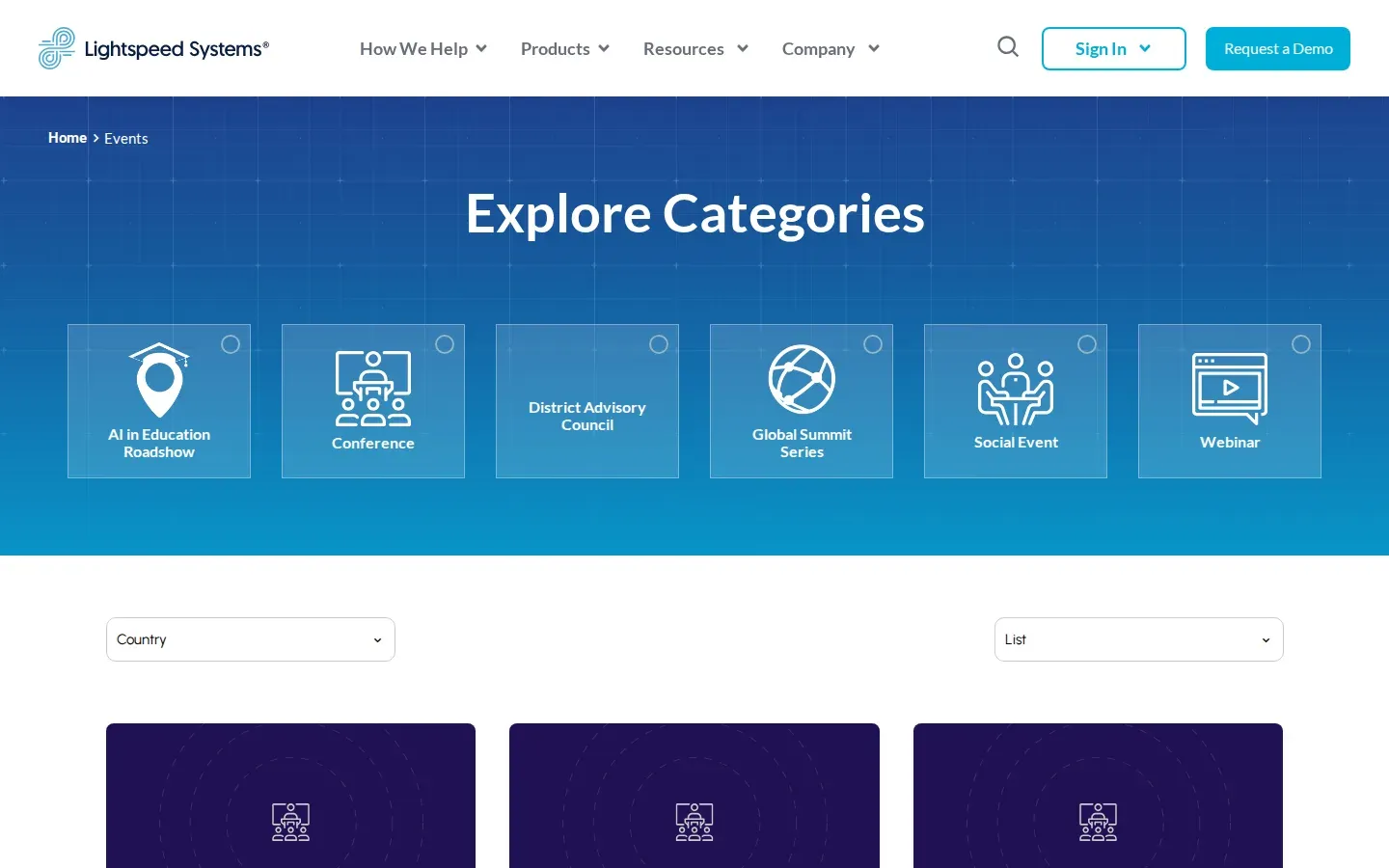
- Events calendar: List and monthly views, filters by category, country and state, and registration forms tied to the marketing platform.
- Microsites: We converted the site to a WordPress multisite and launched the Lightspeed Campus microsite on it. Lightspeed's team can now clone a microsite and launch the next one with little help from us.
- Gated resources: E-books and case studies can be marked as gated, so a download asks for an email address that goes to the marketing platform.
- Audience overview: A "Who we help" page that introduces all eight personas.
Results
- A new design and a full rebuild launched on January 20, 2025, less than three months after kickoff.
- Blog posts, news and resources moved by script with their authors, dates, tags and SEO fields intact, and redirects in place for merged sections.
- A site Lightspeed's marketing team edits directly, including launching its own microsites.
- More than a year and a half of continuous support, with security hardening, an events calendar, a multisite network and gated content added since launch.