
Case study · Semiconductor software
Cliosoft
Semiconductor IP Management Web Platform
Cliosoft wanted engineers across large semiconductor companies to find, share and reuse chip design IP instead of rebuilding it. We led the web platform that made that possible, from the first requirements meeting through ten years of releases.
Overview
Cliosoft built design data management and IP management software for semiconductor companies. Its SOS platform ran on engineers' desktops and inside chip design flows, and more than 150 companies relied on it. Cliosoft wanted to go further: a web platform where engineers and product owners across a large organization could find, share and reuse intellectual property (IP) blocks instead of rebuilding them.
We led that platform from the first requirements meeting in 2013 through ten years of releases, until Cliosoft was acquired by Keysight Technologies in 2023. Our role covered product management, user experience, software architecture, development and automated QA. The product launched as DesignHub and grew into HUB.
Thank you for getting this project off the ground. The Caffeine Interactive team has been such an integral part of HUB.
Srinath Anantharaman, CEO, Cliosoft
The Challenge
A modern chip is assembled from dozens of IP blocks: processor cores, PLLs, SerDes, memories, data converters. Each one has its own versions, its own owners and its own history, and each is stored wherever its team prefers. Analog teams worked in Cliosoft's SOS. Digital teams used Subversion or Git. Others used Perforce or plain network paths.
In a large company that meant nobody could see the whole picture. Business units worked in silos, so one team designed a block another team had already built. A defect found in a block did not reliably reach the people who owned it, or the other teams using the same version. And there was no single place to answer a simple question: which version of which block is in this chip?
Cliosoft needed a platform that sat above all of those systems, worked for engineers who want to search and reuse IP, gave librarians control over what gets published, and let administrators decide who can see what, across multiple sites.
What We Built
Requirements, on site
We ran requirements from an on-site kickoff at Cliosoft: user roles, integration points with existing data management systems, security and performance requirements, user workflows, system architecture, user stories and wireframes. We studied how engineers actually pick IP: by pedigree, by attributes, by who else is using it and how it has held up.
An IP catalog built around how engineers search
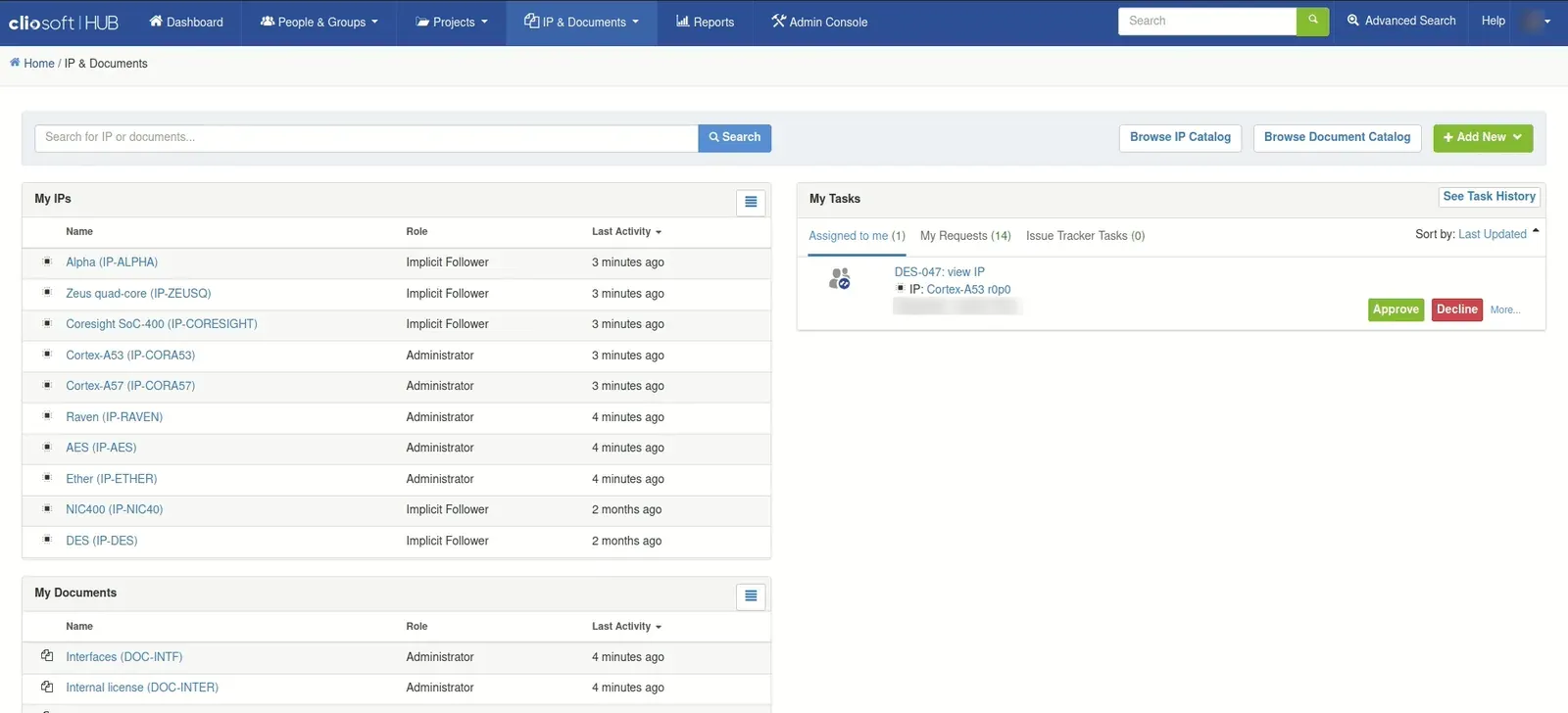
IP, documents and projects each carry types, shared categories, tags and custom attributes, so a block can be browsed by taxonomy or found by searching the parameters engineers care about. Engineers can compare versions and types of IP side by side, and import IP details in the IP-XACT standard rather than typing them in.
The bill of materials for a design
Projects record which IP they use and at what version. That turns HUB into the bill of materials for a chip: one list of every block, every version and where each one lives.
Connected to the systems where the work already happens
HUB connects to Cliosoft's SOS and to other version control systems, so the IP stays where the design team keeps it while HUB tracks it. Issue trackers such as Jira are connected too, so defects are tied to the IP and the version they affect.
Publishing with control
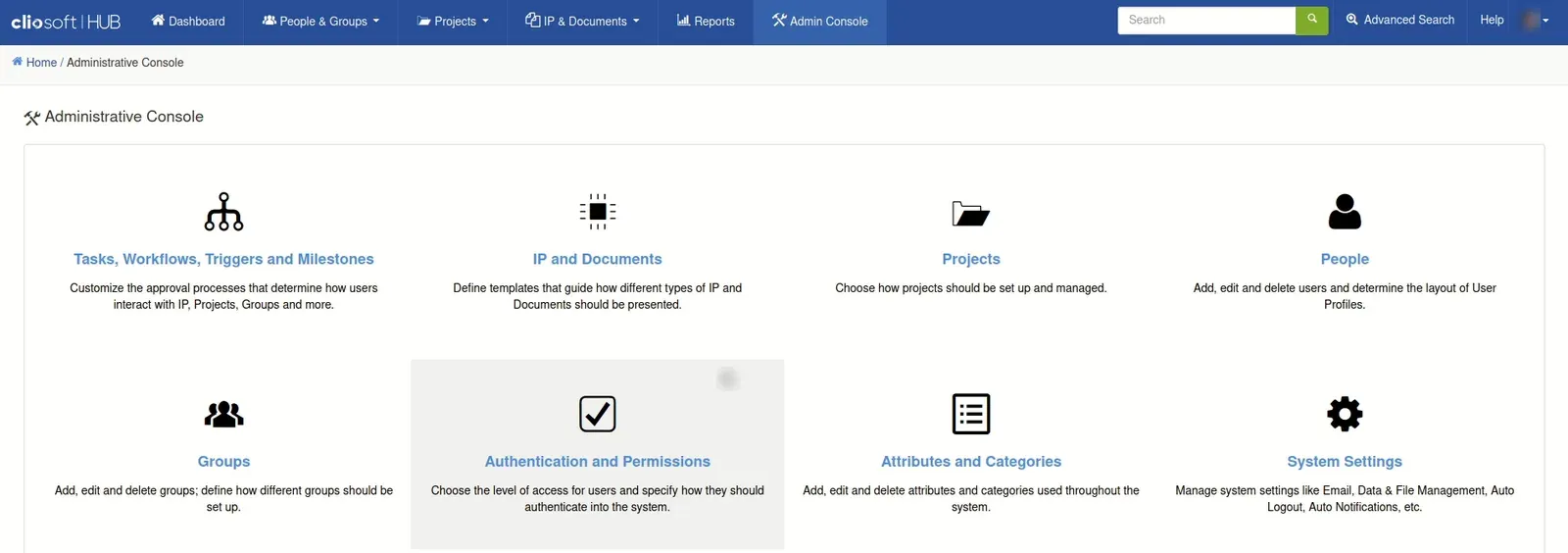
Role-based access with super admins, librarians who approve uploads when approval is required, and group and project admins who decide what is public, private or approval-only. Permissions can be granted to individual users, groups or whole projects.
Collaboration around the IP
Engineers follow the IP and projects they depend on, with activity feeds and discussions on each block. When a new version is published or an issue is opened, the people using that block see it.
A decade of releases
We set up the stack (Django and Angular) and automated testing, brought Cliosoft's own engineers into the same development process, and supported the platform through a long line of releases, upgrades and enterprise rollouts at Cliosoft's customers.
Results
- HUB moved Cliosoft's customers from desktop-only tools to a shared web platform for managing and reusing IP.
- Teams could see what IP already existed across the organization, and reuse it instead of designing it again.
- Defects were tied to the IP and version they affected, and reached the owners and every team using that block.
- The platform became a core part of Cliosoft's position as a leader in semiconductor IP management.
- Cliosoft was acquired by Keysight Technologies in 2023, and the web-based IP management platform was a key factor in that acquisition.