
Case study · Energy
Brazos Valley Connection
Public Project Site for a Transmission Line
CenterPoint Energy needed a public home for the Brazos Valley Connection, a 58.7-mile transmission line from Harris County to Grimes County. We built the site on NationBuilder with a project timeline, a library of PUC filings and route maps, and a media center, then kept it current through the Commission's final order and into construction.
Overview
The Brazos Valley Connection is a 58.7-mile, 345 kV electric transmission line CenterPoint Energy built from Harris County to Grimes County, Texas. A new line like this needs approval from the Public Utility Commission of Texas, and landowners along the proposed routes can follow the case and take part in it.
CenterPoint needed a public website where landowners and the wider community could learn about the project, find the official filings and maps, and sign up for updates. We built brazosvalleyconnection.com on NationBuilder in 2014 and kept it current through the approval process and into construction, until 2018.
The Challenge
The site had to stay accurate while the project moved. Routes were proposed, maps were revised, the Commission ruled and construction started, and each step changed what the public needed to see.
The documents mattered most: large route maps, intervenor maps and formal notices to landowners. They had to be easy to find and quick to download, on browsers as old as Internet Explorer 8.
NationBuilder gave CenterPoint's team signup forms and an editor they could use, but it gives developers little control over page types and content feeds, so several features had to be built around its limits.
What We Built
A theme built from the designer's files
We built a custom NationBuilder theme from the designer's files: a rotating header, the project overview, a Texas Size Demand page on why the line was needed, project history, FAQs and contact pages, with a Get Involved signup form on the home page.
A timeline that tracks the project
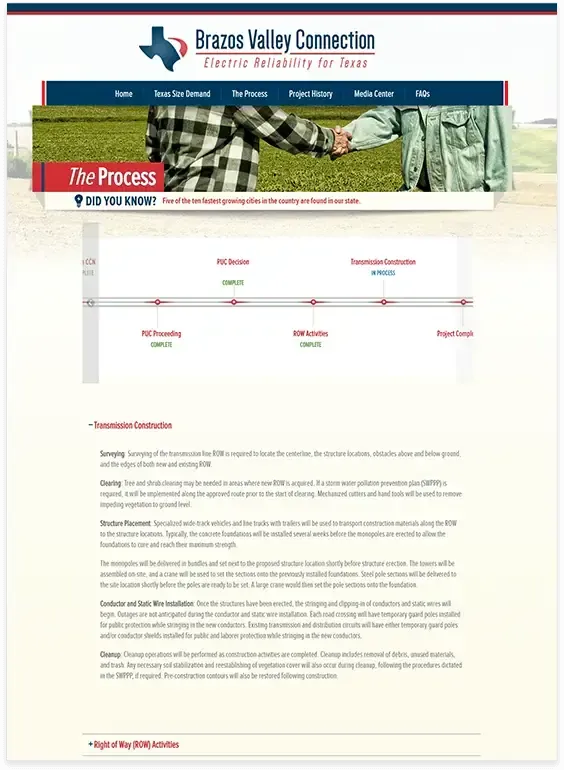
The Process page opens with a timeline of every step, from the study submitted to ERCOT through the Commission's final order, right-of-way work and construction. We rebuilt it from a flat image into HTML so it scrolls sideways, shows detail on hover and jumps to the matching section below. As phases finished we marked them Complete or In Process, so the timeline showed where the project stood.
Filings and maps for landowners
A PUC Filing page collects the Commission docket, the full application with its appendices and environmental assessment, detailed maps of the approved route, 246 land parcel maps, intervenor maps, notices to landowners and the Landowner Bill of Rights. The large map files were served from Amazon S3. When revised intervenor maps came in during the 2015 proceeding, and when approved route notices went out in 2016, we usually had them posted within a day.
A media center and events
NationBuilder pages hold one type of content each, so we built the Media Center from two feeds: press coverage and project updates in the main column, and upcoming events in the sidebar.
Updates for construction
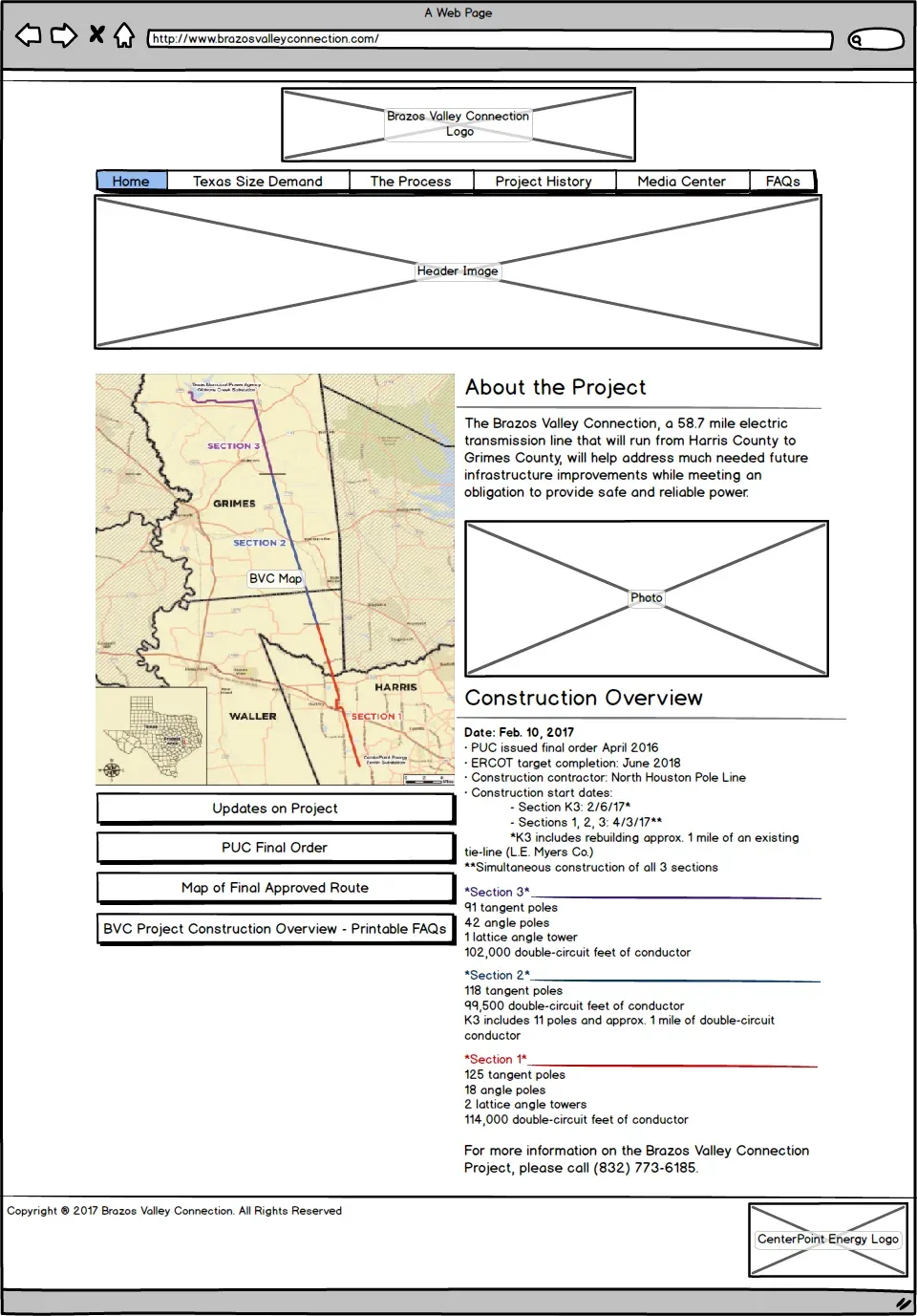
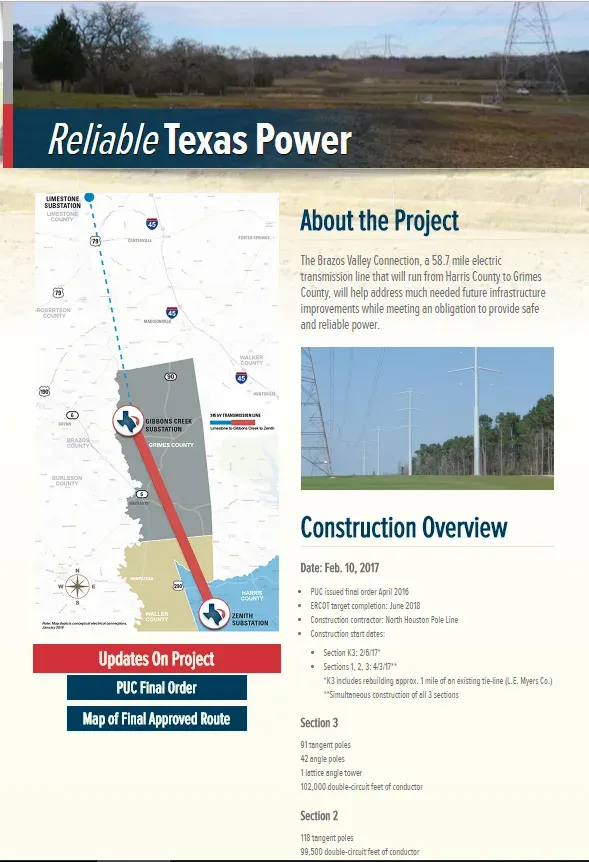
In 2017 we wireframed a new home page for CenterPoint's approval, then built it: the approved route map, a construction overview for each section of the line, new header images and a link to the printable construction handout. We also rewrote the Process page for the construction phase and fixed its layout on phones.
Results
- One public home for the project from before the 2015 filing, through the Commission's final order in January 2016, and into construction.
- Route maps, intervenor maps and landowner notices posted as the case produced them.
- A project timeline the public could check to see which phases were complete.
- Most change requests were live within a day or two.